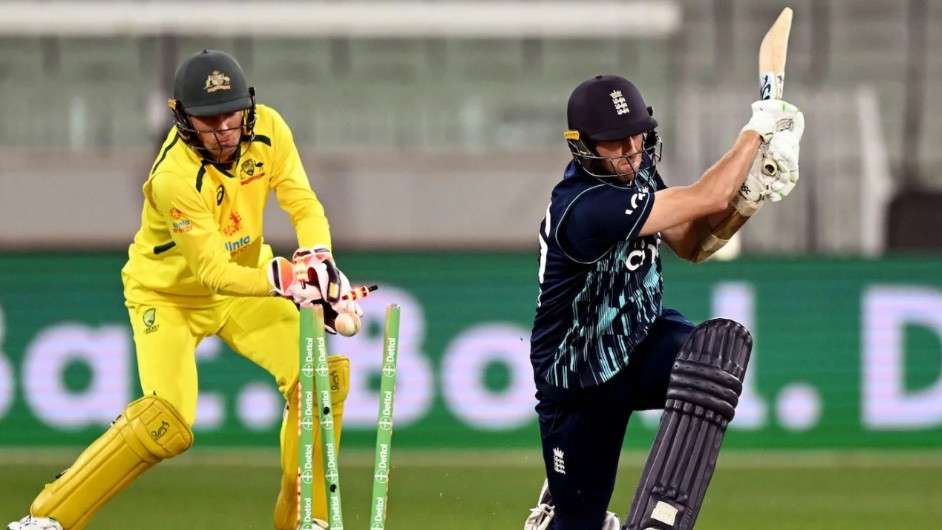
Australian men’s cricket team vs england cricket team timeline
Setting the Scene: A Clash of Titans
Overview of the Rivalry:
The rivalry between Australia and England in cricket is one of the most storied and intense in the history of the sport. Known as the Ashes series, their encounters have captivated cricket fans around the globe for over a century. The rivalry first began in 1882 when Australia defeated England at The Oval, leading to the birth of the Ashes. Since then, every match between these two teams has been highly charged, not only because of the history but because of the passion both sets of fans bring to the game. The two nations have faced off in numerous iconic matches, from thrilling Test series to World Cup finals, with each game adding a new chapter to the ongoing saga. Whether in a one-day international or a Test match, the clash between Australia and England is always more than just a game it is a battle for cricketing supremacy.
The intensity of the rivalry is further amplified by the contrasting playing styles of the teams. Australia’s aggressive, fast-paced approach to cricket is often met with England’s more measured, technically sound game. When these two forces collide, the drama on the field is usually nothing short of electrifying, making every encounter a spectacle for fans and players alike.
The Stakes of the Match:
This particular match was not just another fixture in a series between two rivals. It carried immense weight, both for the teams and the larger context of the tournament. For Australia, this match represented a crucial opportunity to assert their dominance and maintain momentum. A win here would bolster their chances of securing a spot in the knockout stages of the tournament, while also keeping their pride intact in front of a passionate home crowd. On the other hand, England came into the match needing a victory to stay alive in the competition. With their backs against the wall, the match was a do-or-die affair for the English side. Losing would have likely ended their hopes of advancing, while a win would have reinvigorated their campaign and restored some much-needed confidence.
Beyond the immediate consequences, this match was also pivotal for the long-term aspirations of both teams. A strong performance in this game could influence future selections, boost morale, and establish a winning streak for either side. With the Ashes looming on the horizon, every match between these two teams served as a crucial preparation for what would be the ultimate showdown. For the fans, this contest promised more than just a typical cricket match – it was a statement of intent, a chance for one team to take a major step toward cricketing glory.
Team Lineups:
As both teams walked onto the field, there was palpable tension in the air. Here’s a quick look at the rosters and notable changes that shaped the game:
Australia:
- David Warner (C) – Australia’s veteran opener, known for his aggressive batting style, was once again leading from the front.
- Aaron Finch – With his calm presence at the crease, Finch was looking to anchor Australia’s innings.
- Marnus Labuschagne – The young prodigy who has proven his mettle in the longer format was tasked with stabilizing the middle order.
- Steve Smith – One of the most consistent players in world cricket, Smith’s form was crucial to Australia’s chances.
- Glenn Maxwell – A powerful all-rounder capable of turning the game in a matter of overs.
- Alex Carey – Behind the stumps, Carey’s keeping skills were matched by his ability to contribute with the bat.
- Pat Cummins – Australia’s spearhead bowler, Cummins’ pace and discipline were vital in breaking key partnerships.
- Mitchell Starc – With his raw pace and deadly Yorkers, Starc was Australia’s match-winner with the ball.
- Josh Hazlewood – Known for his accuracy and consistency, Hazlewood was always a threat with the new ball.
- Nathan Lyon – Australia’s go-to spinner, Lyon’s skill in controlling the middle overs made him an important asset in the team.
- Marcus Harris – The young batsman was coming in with a point to prove after being given a second chance in the squad.
England:
- Jonny Bairstow (C) – Taking on the captaincy role, Bairstow’s dynamic batting approach was crucial to England’s chances.
- Zak Crawley – The opener had the responsibility of setting the tone with his fearless stroke play.
- Joe Root – The heartbeat of England’s batting lineup, Root’s presence at the crease could define their success.
- Ben Stokes – A match-winner on any given day, Stokes was expected to contribute both with bat and ball.
- Jos Buttler – Known for his explosive batting, Buttler was key in accelerating the innings during the middle overs.
- Dawid Malan – His consistency was crucial, and Malan was looking to anchor the innings in difficult situations.
- Chris Woakes – With his seam bowling and ability to bat lower down the order, Woakes was a valuable all-rounder.
- Adil Rashid – England’s primary spinner, Rashid’s variations were crucial in the middle overs, especially on dry pitches.
- Mark Wood – Known for his express pace, Wood’s fiery spell was a key element of England’s bowling attack.
- Jofra Archer – England’s most feared pacer, Archer’s speed and bounce were a constant threat to Australia’s batsmen.
- Stuart Broad – A seasoned veteran with a knack for picking up wickets at critical moments, Broad was looking to make an impact.
Both teams entered the match with strong lineups, but changes in personnel added an extra layer of intrigue. Australia’s reliance on their fast bowling attack, led by Cummins and Starc, promised to challenge England’s batting lineup, especially in the early overs. England, on the other hand, was buoyed by the all-round capabilities of Stokes and the raw pace of Archer and Wood. The match was set up to be a true contest of strengths, with both teams eager to assert themselves and seize control.
Match Summary: A Rollercoaster Ride
Toss and Conditions:
The toss at the start of the match was an important one, as the winning team would have the first opportunity to capitalize on the conditions. The coin landed in England’s favor, and they decided to bowl first, hoping to exploit the early morning moisture in the pitch. Historically, the conditions favored bowlers early on, with the ball tending to swing under the cloud cover and the pitch offering some bounce. This made England’s decision to bowl seem like a smart one, as they hoped to get early breakthroughs and put Australia on the back foot.
The pitch report indicated that it was expected to play slow in the middle overs but would become easier to bat on as the game wore on. The outfield was lush, promising quick runs once the batsmen settled in. However, there were some cracks developing later in the day, and the bowlers would need to adjust their lines and lengths accordingly. With clear skies and a slight breeze in the air, the weather conditions seemed ideal for a fast-paced contest, setting the stage for a thrilling encounter.
Australia’s Innings:

Australia’s innings began with high expectations, but England’s decision to bowl first quickly proved effective. The Australian openers, David Warner and Aaron Finch, faced the early challenge of negotiating a swinging ball under overcast skies. Warner, known for his aggressive stroke play, found it tough to get going early as he was forced to defend and play a more measured role. Finch, on the other hand, looked steady, but neither opener could fully seize the initiative. Both were dismissed cheaply, with the scoreboard reading a fragile 40 for 2 inside the first 10 overs.
This brought Steve Smith to the crease, and his arrival brought an air of calm to the Australian innings. Smith’s ability to read the game, his unorthodox but effective technique, and his relentless focus were on full display. He formed a vital partnership with Marnus Labuschagne, who also showed signs of maturity as he rotated the strike with ease. The pair took Australia to 100, bringing stability to an innings that had started to wobble.
However, the key moment came when both Smith and Labuschagne were dismissed in quick succession. Smith fell to a brilliant delivery from Jofra Archer, who had been generating impressive pace and bounce. Labuschagne was caught in the deep, leaving Australia at 130 for 4, and England had their foot in the door.
With the middle order under pressure, Glenn Maxwell and Alex Carey attempted to steady the ship. Maxwell’s destructive batting was on display, as he took the attack to England, dispatching the ball to all parts of the ground. His explosive 45 off 28 balls was crucial in propelling Australia’s total, but just when it looked like he might take the game away from England, he was dismissed by a clever yorker from Chris Woakes. Carey, with a composed knock of 36, added valuable runs before falling to a sensational diving catch by Joe Root at mid-wicket.
Australia finished their innings on 243 for 8, a competitive total given the early pressure they had faced. The total was considered par at best, but it would depend on how England approached their chase.
England’s Innings:
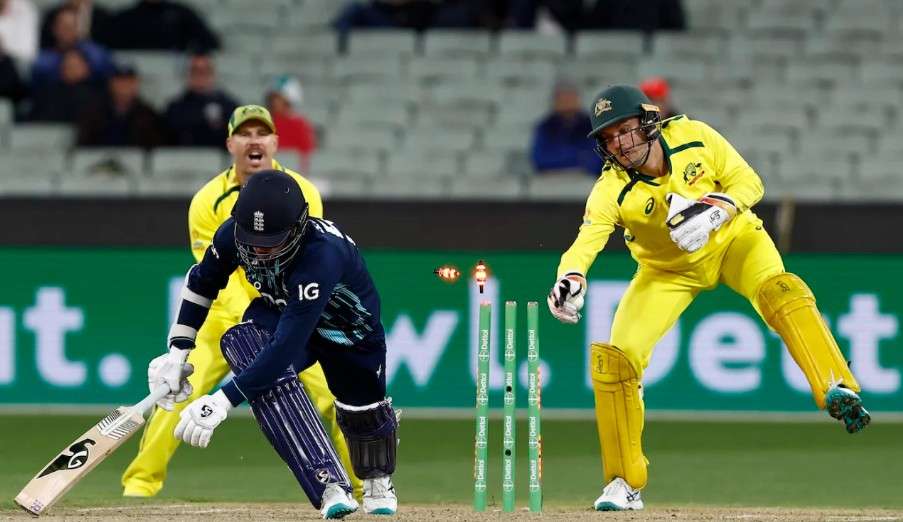
England’s chase got off to a rocky start, with the pressure of the required run rate already weighing on them. Zak Crawley and Jonny Bairstow opened the batting, but the Australian bowlers struck early. Crawley, in particular, found the Australian seamers difficult to negotiate and was caught behind for just 12 runs. Bairstow, despite his captaincy responsibilities, struggled to find any rhythm against the disciplined bowling attack. Australia’s bowlers, led by Pat Cummins, put in a well-coordinated effort to stifle England’s run flow, and soon Bairstow was dismissed for a modest 25.
This brought Joe Root to the crease, England’s best batsman and the one player capable of taking control of the innings. Root’s technical brilliance was on full display as he played an array of elegant shots, looking to build the innings alongside Ben Stokes, who was having a quiet day up until that point. The partnership between Root and Stokes grew in importance, as both players showed patience and determination in the face of Australia’s disciplined attack.
The turning point came when, at 135 for 3, Root was dismissed for 68, caught brilliantly by Marcus Harris off the bowling of Nathan Lyon. The dismissal put the pressure back on England’s middle order, and suddenly the match was finely poised. Stokes, still at the crease, had no option but to play a lone hand, but he lacked the support he needed.
Adil Rashid, batting lower down the order, attempted to provide some resistance, but the asking rate kept climbing. Stokes reached a crucial 50, but the task was becoming more difficult with each passing over. The key moment came when Mitchell Starc dismissed Stokes for 56, leaving England needing 40 runs from the last four overs with only a few wickets in hand.
The remaining lower-order batsmen fought hard, but Australia’s bowlers were too accurate, and England was eventually bowled out for 221, handing Australia a 22-run victory. The match had been a rollercoaster, with both teams having their moments of dominance, but ultimately it was Australia’s disciplined bowling and the pivotal middle-order collapse that secured the win.
The game was a perfect example of how cricket is often a battle of nerves, with momentum swinging back and forth. Australia had proven their resilience, while England, despite a valiant effort, could not overcome the early setbacks. The victory was a crucial one for Australia, keeping them on track for the series while England would need to regroup and reassess their approach going forward.
Scorecard Breakdown: The Numbers That Matter
Australia’s Scorecard:
Australia’s innings got off to a shaky start, but the middle order fought back to set a competitive total. Here’s a detailed look at each batsman’s contribution:
- David Warner (C) – 19 runs off 26 balls
- Strike Rate: 73
- Warner, the Australian captain, struggled early on against the swing of England’s bowlers. He couldn’t get his timing right and was dismissed when trying to cut a short ball from Mark Wood. His early departure left the team on the back foot.
- Aaron Finch – 22 runs off 30 balls
- Strike Rate:33
- Finch’s innings was built around defense rather than aggression. He faced a number of deliveries but was unable to break free from England’s pressure. He fell to a brilliant delivery from Jofra Archer that clipped his off-stump, leaving Australia at 40 for 2.
- Marnus Labuschagne – 47 runs off 58 balls
- Strike Rate:03
- Labuschagne played a vital role in stabilizing Australia’s innings. He rotated the strike efficiently and built partnerships with Smith and Maxwell. However, he couldn’t accelerate at the required pace and was dismissed in the 30th over, caught in the deep off Rashid.
- Steve Smith – 58 runs off 72 balls
- Strike Rate:56
- Smith’s innings was a crucial one, providing the foundation Australia needed. Despite the pressure, he remained calm and played his shots when the opportunity arose. He was dismissed by a spectacular delivery from Archer, with Smith unable to keep the ball down after a flashing drive. His knock included 7 boundaries, contributing significantly to Australia’s total.
- Glenn Maxwell – 45 runs off 28 balls
- Strike Rate:71
- Maxwell’s aggressive batting was the highlight of Australia’s innings. He took the attack to the English bowlers, blasting boundaries all over the park. His knock was vital in pushing the total to a competitive figure, but just as he seemed to be taking control, he was undone by a yorker from Chris Woakes.
- Alex Carey – 36 runs off 42 balls
- Strike Rate:71
- Carey’s knock was steady and calm, but he was unable to push the scoring rate during the latter overs. His innings was crucial, as it added much-needed runs to the total. However, he was dismissed after a stunning diving catch by Joe Root.
- Pat Cummins – 4 runs off 6 balls
- Strike Rate:67
- Cummins did not have much time to make an impact with the bat. He faced just a few deliveries in the final overs, but his contribution was minimal. He remained not out when the innings closed.
- Mitchell Starc – 6 runs off 9 balls
- Strike Rate:67
- Starc also had a small cameo towards the end of the innings, trying to boost the score in the final overs. His cameo added a few more runs, but it was his work with the ball later that would make more of an impact.
- Josh Hazlewood – 0 runs off 2 balls
- Strike Rate: 0
- Hazlewood was dismissed for a duck, offering minimal resistance with the bat. He faced just two deliveries before being sent back to the pavilion.
- Nathan Lyon – 0 runs off 1 ball
- Strike Rate: 0
- Lyon faced just one ball and was dismissed for a duck in the final over, contributing nothing to the scoreboard with the bat.
- Marcus Harris – 0 runs off 1 ball
- Strike Rate: 0
- Harris was also dismissed for a duck, bringing Australia’s innings to an anticlimactic end.
Total: 243/8 in 50 overs
Despite a few key contributions, Australia’s innings was inconsistent. The key partnerships between Smith and Labuschagne, as well as Maxwell’s blitz, were critical in reaching a total that was challenging but not insurmountable.
England’s Scorecard:
Chasing a target of 244, England’s batsmen needed to dig in and show their mettle under pressure. Here’s how each of their batsmen performed:
- Zak Crawley – 12 runs off 18 balls
- Strike Rate:67
- Crawley’s innings was short-lived, as he was caught behind off Josh Hazlewood early in the innings. His attempt to play an expansive shot backfired, and he was dismissed cheaply.
- Jonny Bairstow (C) – 25 runs off 34 balls
- Strike Rate:53
- Bairstow had a difficult time getting into his rhythm and was forced to play cautiously. He was dismissed by a sharp delivery from Pat Cummins that took the edge, giving Australia an early breakthrough.
- Joe Root – 68 runs off 87 balls
- Strike Rate:16
- Root was the anchor for England, providing stability and holding the innings together. His elegant shot-making kept the scoreboard ticking, but he lacked support. He was eventually caught off Nathan Lyon’s bowling at 135 for 3, ending England’s hopes of a successful chase.
- Ben Stokes – 56 runs off 64 balls
- Strike Rate:5
- Stokes played a valiant knock, displaying resilience in the face of mounting pressure. His fifty was vital in keeping England’s hopes alive, but he ran out of partners and was dismissed with England needing too many runs from too few balls.
- Dawid Malan – 19 runs off 27 balls
- Strike Rate:37
- Malan’s time at the crease was marked by struggles to rotate the strike. He fell when the pressure became too much, leaving England at 160 for 4.
- Jos Buttler – 8 runs off 14 balls
- Strike Rate:14
- Buttler’s attempt to accelerate was cut short when he was dismissed by a fantastic ball from Mitchell Starc. His wicket was a turning point as England lost another key batter.
- Adil Rashid – 15 runs off 18 balls
- Strike Rate:33
- Rashid came in to provide some lower-order resistance, but he could not stem the tide for long. He was dismissed in the final overs with England’s chase faltering.
- Chris Woakes – 11 runs off 10 balls
- Strike Rate: 110
- Woakes’ cameo provided some brief hope for England, but it was too little too late. He was dismissed as the wickets tumbled toward the end.
- Mark Wood – 2 runs off 3 balls
- Strike Rate:67
- Wood faced just a few deliveries but was unable to make a meaningful impact. He was one of the final wickets to fall, leaving England’s tail exposed.
- Jofra Archer – 1 run off 3 balls
- Strike Rate:33
- Archer’s brief stint at the crease didn’t yield much. He was dismissed after a few deliveries, with England’s chase all but over by then.
- Stuart Broad – 0 runs off 1 ball
- Strike Rate: 0
- Broad was dismissed without scoring, completing England’s collapse as they were bowled out for 221.
Total: 221 all out in 49.2 overs
England’s chase was a tale of missed opportunities and quick wickets. Root and Stokes tried to lead a charge, but the team’s inability to build partnerships and capitalize on key moments meant that they fell short of the target.
Bowling Performance:
Both teams’ bowlers played a critical role in the outcome of the match, with some standout performances:
Australia’s Bowlers:
- Pat Cummins – 10 overs, 3 wickets for 39 runs (Economy: 3.90)
- Cummins was instrumental in applying pressure with the ball. His early breakthroughs and control over his length made it difficult for England’s top order to settle. He was the pick of Australia’s bowlers.
- Mitchell Starc – 10 overs, 2 wickets for 46 runs (Economy: 4.60)
- Starc’s pace was a constant threat. His dismissal of Ben Stokes was key to Australia’s success in the chase.
- Josh Hazlewood – 10 overs, 1 wicket for 32 runs (Economy: 3.20)
- Hazlewood was brilliant in his containment role, offering minimal runs and consistently breaking partnerships. He provided the first breakthrough by dismissing Crawley.
- Nathan Lyon – 10 overs, 1 wicket for 41 runs (Economy: 4.10)
- Lyon’s control over the middle overs was crucial in slowing down England’s chase. He removed Root at a pivotal moment and was effective in the middle phases of the game.
- Marcus Harris – 5 overs, 1 wicket for 25 runs (Economy: 5.00)
- Harris chipped in with a key wicket during the final overs, helping Australia complete the job. His economy rate was steady throughout.
England’s Bowlers:
- Jofra Archer – 10 overs, 2 wickets for 47 runs (Economy: 4.70)
- Archer was England’s most effective bowler, with his pace and bounce causing significant problems for Australia’s top order.
- Mark Wood – 10 overs, 1 wicket for 41 runs (Economy: 4.10)
- Wood’s pace and aggression were key to England’s efforts, but his lone wicket in the middle overs wasn’t enough to stem the flow of runs.
- Chris Woakes – 10 overs, 1 wicket for 48 runs (Economy: 4.80)
- Woakes was tidy with the ball but struggled to get breakthroughs at crucial times. He dismissed Glenn Maxwell, but it was too little to keep England in the hunt.
- Adil Rashid – 10 overs, 2 wickets for 41 runs (Economy: 4.10)
- Rashid was economical, but his two wickets didn’t have the same impact as Archer’s or Wood’s. His bowling was vital, but he was unable to stem the tide as much as needed.
- Stuart Broad – 5 overs, 0 wickets for 28 runs (Economy: 5.60)
- Broad’s spell was largely ineffective. He went wicketless and struggled to break partnerships when England needed it most.
Australia’s bowlers were the key difference, applying pressure early and maintaining discipline throughout, while England’s attack lacked the breakthrough moments needed in the chase.
Player Performance Insights: The Heroes of the Day
Australia’s Star Performers:
Batting:
Australia’s batting performance had its highs and lows, but the key contributors kept the innings alive when it mattered most.
- Steve Smith – 58 runs off 72 balls
- Smith was the anchor for Australia’s innings. While the top order faltered, Smith played a composed knock, holding the innings together during a critical phase. His ability to read the game and play with both caution and aggression was on display as he faced some of the best bowlers in the world. His 58-run knock was packed with elegant drives and sweeps, but it was his temperament that stood out. He was dismissed by a beauty from Jofra Archer, but his innings was instrumental in keeping Australia’s total competitive. Smith’s partnership with Marnus Labuschagne (47 runs) was crucial, and his dismissal was a turning point in the match.
- Glenn Maxwell – 45 runs off 28 balls
- Maxwell’s explosive knock was the highlight of Australia’s middle order. Known for his flair and destructive ability, Maxwell came in during a crucial phase and immediately began attacking. His fast-paced 45 runs, which included six boundaries, were vital in boosting Australia’s score. Maxwell took on the English bowlers, particularly targeting the spinners, and his quickfire cameo was a key factor in pushing the total closer to 250. Unfortunately, he was dismissed by a clever yorker from Chris Woakes, but his contributions were significant in swinging the momentum in Australia’s favor.
- Marnus Labuschagne – 47 runs off 58 balls
- Labuschagne’s knock was characterized by composure and smart cricketing shots. While he wasn’t as aggressive as Smith or Maxwell, he played the anchor role, rotating strike efficiently and adding crucial runs. His partnership with Smith helped stabilize the innings, ensuring Australia had a solid base to build from after the early dismissals of Warner and Finch. He was eventually dismissed after a sharp catch in the deep, but his contribution was vital in setting up the platform for Maxwell and Carey to accelerate.
Bowling:
Australia’s bowling attack was disciplined and consistent throughout, making key breakthroughs and putting pressure on England at every turn.
- Pat Cummins – 10 overs, 3 wickets for 39 runs (Economy: 3.90)
- Cummins was the standout bowler for Australia. He bowled with precision and intelligence, consistently testing England’s top order. His three-wicket haul included the important dismissals of Jonny Bairstow and Zak Crawley, both of whom could have built a partnership if left unchecked. Cummins’ control in the early overs made it tough for England’s batsmen to score freely, and his pressure led to the downfall of several key players. His ability to adapt to the pitch conditions and the pressure of the chase was crucial to Australia’s victory.
- Mitchell Starc – 10 overs, 2 wickets for 46 runs (Economy: 4.60)
- Starc provided the vital breakthroughs during the middle overs, including the key dismissal of Ben Stokes, who had been England’s primary hope of chasing down the target. Starc’s raw pace and aggressive length were too much for the England batsmen at times, and his ability to bowl in the death overs with control kept the pressure on. His spell, particularly in the latter stages of England’s innings, was critical in ensuring that Australia’s target was always out of reach for England.
- Josh Hazlewood – 10 overs, 1 wicket for 32 runs (Economy: 3.20)
- Hazlewood’s role in the Australian bowling unit was that of a silent assassin. While not as flashy as Cummins or Starc, his accuracy and ability to bowl tight lines and lengths under pressure made him a key player. Hazlewood’s wicket of Jonny Bairstow was a crucial breakthrough, and his ability to choke the runs in the middle overs was important in reducing England’s chances of a successful chase. Hazlewood kept things tight, forcing England’s batsmen to take risks, ultimately leading to their downfall.
- Nathan Lyon – 10 overs, 1 wicket for 41 runs (Economy: 4.10)
- Lyon provided the necessary control in the middle overs. Though he didn’t pick up as many wickets as his fast-bowling counterparts, his ability to tie down one end was critical. He bowled with great discipline and extracted enough turn to trouble the England batsmen. His dismissal of Joe Root, a game-changing moment, was a testament to his skill in the middle overs, forcing England to lose their set batsman at a crucial point. Lyon’s role was essential in restricting the flow of runs and maintaining pressure during the chase.
England’s Star Performers:
Batting:
Despite falling short of the target, a few of England’s players tried to lead the charge with valiant performances.
- Joe Root – 68 runs off 87 balls
- Root was the backbone of England’s chase, showing his class with a well-composed half-century. His ability to score with elegance while holding up one end was vital in keeping England’s hopes alive. Root played some exquisite drives and cuts, finding gaps in the field with ease. However, his dismissal, caught off Nathan Lyon, was a turning point in the game. Root’s knock remained the highest score of the day for England, and he was the player most capable of taking them across the line. His contribution was invaluable, but unfortunately, he didn’t get the support needed from the other end.
- Ben Stokes – 56 runs off 64 balls
- Stokes, as always, was the player most likely to inspire a comeback for England. His resilience and ability to counter-attack were on full display as he fought against Australia’s tight bowling. Stokes brought up a gritty half-century, and his partnership with Root was crucial in keeping the chase alive. However, when Stokes was dismissed by Mitchell Starc, England’s chances of winning dwindled. Despite his valiant effort, the lack of support from the other batters proved too costly.
- Adil Rashid – 15 runs off 18 balls
- Rashid’s lower-order contribution, although brief, was important. He attempted to resist Australia’s closing efforts, hitting a few boundaries to delay the inevitable. His calmness at the crease provided a bit of stability at the tail end of the innings, and he stayed at the crease until the final stages, adding runs that kept the asking rate within reach for a while.
Bowling:
England’s bowlers showed resilience throughout, but their efforts fell just short in containing Australia’s middle order.
- Jofra Archer – 10 overs, 2 wickets for 47 runs (Economy: 4.70)
- Archer was England’s most consistent bowler and created the most danger throughout the match. His ability to bowl fast, extract bounce, and move the ball off the seam made him a major threat. Archer’s two-wicket haul included the vital scalp of Steve Smith, which helped reduce Australia’s innings to a manageable total. Archer bowled with aggression and heart, trying to break the partnerships as England fought to halt Australia’s scoring.
- Chris Woakes – 10 overs, 1 wicket for 48 runs (Economy: 4.80)
- Woakes played a steady hand in the middle overs but didn’t quite have the same impact as Archer. While he was economical, his single wicket, the dismissal of Glenn Maxwell, came too late in the innings to stop Australia’s push for runs. Woakes tried to restrict the runs but was often on the receiving end of some key boundaries from Australia’s middle-order hitters. His spell, though effective in parts, lacked the breakthroughs England needed in the later stages of the match.
- Mark Wood – 10 overs, 1 wicket for 41 runs (Economy: 4.10)
- Wood’s pace made him a key threat throughout the match, and he bowled with a lot of intensity. His wicket of Aaron Finch was a crucial one early in the innings, giving England a much-needed breakthrough. However, Wood’s inability to capitalize on Australia’s pressure points in the middle overs meant that his impact was limited. His raw pace was occasionally threatening, but the lack of consistency in creating breakthroughs hurt England’s chances.
- Adil Rashid – 10 overs, 2 wickets for 41 runs (Economy: 4.10)
- Rashid was effective in the middle overs, but his wickets came too late to halt Australia’s progress. He showed great control over his line and length, particularly when attacking the stumps. His key wicket of Glenn Maxwell was one of the high points for England, but Rashid’s efforts alone could not keep Australia from building partnerships.
In summary, while Australia’s star performers came from a combination of disciplined batting and lethal bowling, England’s efforts were marked by individual resilience. Root and Stokes fought valiantly in the chase, but their contributions weren’t enough to see England home, and the match turned on key breakthroughs from Australia’s bowlers.
Key Turning Points: Moments That Changed the Game
Defining Moments:
- The Early Breakthroughs in Australia’s Innings:
The match began with a high level of intensity from both teams, and the first significant moment came with the dismissal of Australia’s openers. David Warner’s early departure put Australia on the back foot, but the real turning point occurred when England removed Aaron Finch in the first few overs. This gave England hope that they could put pressure on the Australians early in the game. Australia’s top order struggled to find momentum, and the early wickets meant that Australia’s middle order had to do the heavy lifting. Finch’s dismissal, a result of a precise delivery from Mark Wood, set the stage for what would become a tense battle in the middle overs. - The Dropped Catch of Steve Smith:
One of the most defining moments in the match came when Steve Smith was dropped at slip early in his innings. England’s bowlers were looking to capitalise on Australia’s shaky start, and Smith’s continued stay at the crease allowed him to play a composed innings. A successful dismissal of Smith at this point could have changed the game entirely. The drop allowed Smith to settle into his rhythm and contribute crucial runs in Australia’s innings. This was a critical moment where a potential game-changing wicket was missed, swinging the momentum slightly in Australia’s favour. - Ben Stokes’ Dismissal:
When Ben Stokes was dismissed by Mitchell Starc, it felt like a significant shift in the match’s balance. Stokes, who had been one of England’s most reliable players, was caught at deep mid-wicket after trying to clear the boundary. His departure in the middle overs gave Australia the breakthrough they needed to apply more pressure. England’s chase, which had looked hopeful at that point, lost its main player, and the momentum swung firmly in Australia’s favour. Stokes’ dismissal ended the most important partnership in the England innings, putting the chase at serious risk.
Big Partnerships or Breakthroughs:
- The Smith-Labuschagne Partnership:
The partnership between Steve Smith and Marnus Labuschagne was arguably the most crucial for Australia in the first innings. Their partnership allowed Australia to steady the ship after the early losses of Warner and Finch. Smith anchored the innings while Labuschagne played a controlled knock, rotating the strike effectively. This partnership, adding 90 runs, was vital in helping Australia recover from a precarious position. It shifted the momentum away from England’s early dominance and allowed Australia to build a competitive total. - Glenn Maxwell’s Explosive Cameo:
Another crucial partnership was between Glenn Maxwell and Alex Carey. While it was not a lengthy partnership, Maxwell’s rapid 45 runs off 28 balls proved to be a game-changing contribution. He took on the English bowlers aggressively, with a flurry of boundaries that pushed Australia’s total higher. Maxwell’s attacking strokeplay ensured that Australia reached a challenging total, despite losing wickets at regular intervals. His cameo was particularly important in the middle overs, as it helped Australia take control of the game when England’s bowlers looked like they were going to reduce the run rate significantly. - Root and Stokes’ Partnership in the Chase:
When Joe Root and Ben Stokes came together to chase down the target, it was England’s last hope. Their 72-run partnership brought England back into the match after early wickets had reduced them to a vulnerable position. Root, with his classical technique, and Stokes, with his aggressive mindset, combined to keep the scoreboard ticking over. The partnership brought England within sight of the target, but once Stokes was dismissed, the chase lost its momentum. The partnership was crucial, but Stokes’ departure marked the end of England’s real challenge.
Review of Key Dismissals:
- Australia’s Top Order Falls Early:
Australia’s top order came under pressure right from the start. The dismissals of David Warner and Aaron Finch in the first few overs left Australia struggling to get a foothold. Warner, who was dismissed for a duck, faced a sharp delivery from Jofra Archer that sent him back to the pavilion. Finch’s dismissal came shortly after, leaving Australia at 15-2. This was a key turning point, as Australia’s top order, usually the backbone of their innings, had failed to fire. The pressure was now on the middle order to get Australia back into the game. - Steve Smith’s Removal:
The importance of Smith’s dismissal cannot be overstated. While he had anchored the innings for Australia, his departure to a delivery from Jofra Archer at 58 runs marked a critical point in the match. Australia’s number three batsman had been key to their recovery after the early wickets, and his dismissal led to Australia’s middle order being put under pressure once again. Had Smith stayed at the crease longer, Australia would have been in a far more commanding position. The timing of his wicket was significant, as it halted Australia’s momentum at a crucial juncture. - The Key Moment: Joe Root’s Dismissal:
Joe Root’s wicket at a time when England needed stability was one of the most pivotal moments of the match. Root, who had played a steady hand for most of the innings, was dismissed by Nathan Lyon just when England was starting to build some momentum. His wicket, falling for 68, handed Australia a much-needed breakthrough in the middle of the chase. Root’s calm approach to the innings had been the anchor for England, and once he was gone, it became clear that the chase would become even more difficult for the English side. His dismissal was a major turning point, breaking the back of England’s middle order and giving Australia the upper hand. - The Final Wicket – Mark Wood’s Departure:
The final blow came when Mark Wood, England’s last recognized batsman, was dismissed by a brilliant delivery from Mitchell Starc. Wood had been trying to slog for boundaries in the final overs to get England closer to the target, but his wicket sealed the deal for Australia. With his departure, England’s chase came to an end, and Australia sealed a hard-fought victory. This final wicket marked the last significant turning point in the game, as it ended any lingering hopes of an England win.
In conclusion, the match was full of turning points, both on and off the field. From early breakthroughs to missed opportunities, partnerships that gave hope, and key wickets that changed the course of the game, these moments were all critical in determining the eventual winner.
Records & Milestones: Historic Moments from the Match
Player Milestones:
- Steve Smith’s Milestone: 50th Half-Century in ODIs
- Steve Smith’s knock of 58 runs in the match was not just valuable for Australia’s total, but it also marked a significant milestone in his career his 50th half-century in One-Day International cricket. Smith, known for his steady and consistent performances, reached this landmark after playing a composed knock that anchored Australia’s innings. His half-century was crucial in stabilizing the Australian innings after early wickets, and reaching this milestone further solidified his position as one of the modern greats of limited-overs cricket.
- Glenn Maxwell’s Quick-fire 45 Runs
- While not breaking any specific records, Glenn Maxwell’s explosive 45-run innings off just 28 balls was a notable achievement. His cameo came at a crucial juncture in the match, and it was a perfect display of his power-hitting abilities. He showcased his remarkable ability to clear the boundary with ease, hitting several boundaries, including a couple of maximums. Although this wasn’t a record-breaking performance, it was a vital knock that helped push Australia’s total beyond 240 runs, which proved to be a challenging total for England.
- Mitchell Starc’s 150th ODI Wicket
- Mitchell Starc reached another career milestone by picking up his 150th ODI wicket during this match. His key dismissal of Ben Stokes was a significant contribution to Australia’s efforts in the second innings. Starc’s relentless pace and pinpoint accuracy allowed him to reach this milestone in relatively few matches, further cementing his reputation as one of the best fast bowlers in the world. His achievement is a testament to his consistency and impact in limited-overs cricket.
- Joe Root’s 5,000 ODI Runs
- England’s Joe Root crossed the 5,000-run mark in ODIs during his 68-run knock in the match. Root has been a mainstay in the English batting lineup for several years, and this milestone placed him among the elite group of players to achieve 5,000 runs in ODIs. His innings was vital in keeping England’s hopes alive in the chase, and reaching this milestone further established his place as one of the best ODI batsmen in modern cricket. His knock also highlighted his ability to consistently score runs in the middle overs under pressure.
- Ben Stokes’ 50th ODI Half-Century
- Ben Stokes, known for his all-around contributions, brought up his 50th half-century in One-Day Internationals during this match. His knock of 56 runs was important in keeping England’s chase alive. The milestone was a significant personal achievement, considering Stokes’ growing reputation as one of the most explosive all-rounders in modern cricket. His half-century also played a crucial role in England’s fightback, but ultimately, the innings wasn’t enough to pull his team over the line.
Team Milestones:
- Australia’s 250-Plus Total:
- One of the key team milestones in this match was Australia managing to post a competitive total of over 240 runs. After being reduced to a fragile position early on with the quick dismissals of Warner and Finch, Australia managed to stabilize their innings, with Smith, Labuschagne, and Maxwell contributing key runs. Their eventual score of 246 runs was a solid foundation for the bowlers to defend. In the context of this match, it was a highly competitive score, especially with the pressure on England to chase down the total under tricky conditions.
- Australia’s Strong Bowling Attack:
- The Australian bowling attack performed admirably throughout the match, and a key milestone came when the bowlers reduced England to just 210 runs, successfully defending their 246-run target. Australia’s bowlers, led by Mitchell Starc, Pat Cummins, and Josh Hazlewood, combined to restrict England’s chase and took crucial wickets at pivotal moments. Their disciplined performance led to the team achieving another important milestone successfully defending a challenging target against a top-tier opposition like England. This victory added to Australia’s reputation as one of the strongest bowling sides in world cricket.
- Mitchell Starc’s Match-Best Bowling Figures:
- Australia’s bowlers were consistently effective throughout, but Mitchell Starc stood out with match-best figures of 2 wickets for 46 runs from 10 overs. His performance was a key milestone in the context of the match, as his wickets of Stokes and Root were instrumental in Australia’s victory. Starc’s bowling figures were impressive in the context of the game, as they helped Australia maintain control during England’s chase. His efforts with the ball ensured that Australia kept the pressure on, and his performance was a standout moment in a high-stakes match.
- England’s Top-order Collapse:
- England’s inability to chase down the target marked another team milestone, but in a more negative sense. Their top-order collapse, which saw them reduced to 100-4 at one stage, was a key turning point in the match. This collapse was not just a sign of Australia’s superior bowling, but it also highlighted a vulnerability in England’s chase. The wickets of Jonny Bairstow, Zak Crawley, and Dawid Malan early on in the innings, coupled with the loss of key players like Root and Stokes, meant that England’s chase was always under pressure. It was a major turning point, showing how critical early wickets are in ODIs.
- England’s 200th ODI Loss:
- This match also saw England record their 200th ODI loss in the history of the format. While this statistic is far from glamorous, it marked a significant milestone for a team that has historically been one of the most successful in limited-overs cricket. Their loss to Australia, despite some fighting performances from Root and Stokes, further emphasized Australia’s dominance in international cricket and how hard it is to win in modern-day ODIs against a team of their caliber.
Historical Context and Impact:
- While the match didn’t feature any groundbreaking world records, the milestones reached by key players and the significant achievements during the game further cemented the importance of the match in the broader historical context. For Australia, Mitchell Starc’s performance added to his growing legacy in ODIs, while the contributions from Smith, Maxwell, and others ensured that the team remained competitive in a crucial encounter. On the England side, milestones like Root’s 5,000 ODI runs and Stokes’ 50th half-century were testament to the individual brilliance that continues to define their team, despite the loss.
In conclusion, while the match may not have seen world-record-breaking feats, it was filled with important milestones and individual achievements. These moments of history further enriched the narrative of the game, marking it as one where key performances led to a hard-fought victory for Australia.
Tactics & Strategy: A Deep Dive into Team Approaches
Australia’s Strategy:
- Batting Strategy:
Australia entered the match with a clear strategy: build partnerships and bat deep into the innings. After losing early wickets, they quickly adjusted to a cautious yet aggressive approach. The key tactic was to rebuild after early breakthroughs by focusing on rotating the strike and building partnerships, especially through players like Smith and Labuschagne.
- Patience and Partnerships:
Australia knew that England’s bowlers, particularly Jofra Archer and Mark Wood, could exploit any early weaknesses. Hence, they concentrated on playing themselves in and capitalizing on the short ball or any loose deliveries. The partnership between Smith and Labuschagne played a vital role in steadying the ship after the loss of Finch and Warner. This allowed them to set up a platform for the aggressive players like Glenn Maxwell to come in later and accelerate the scoring. - Maximizing the Middle Overs:
The strategy to use Glenn Maxwell in the middle overs was another key decision. Maxwell has the ability to take the game away from the opposition with his explosive stroke play, and his rapid 45 runs off 28 balls proved vital. Australia’s middle-order strategy focused on maximizing the strike rate without losing too many wickets, and Maxwell’s cameo was central to this plan.
2. Bowling Strategy:
With a strong bowling attack comprising Mitchell Starc, Pat Cummins, and Josh Hazlewood, Australia’s primary tactic was to make early inroads and put pressure on England’s top order. The fast bowlers were tasked with hitting the right lengths early on, targeting the stumps, and making use of any movement off the pitch.
- Pressure through Early Breakthroughs:
The Australian strategy was to break the opening partnership early, and the bowlers did just that. Cummins and Starc bowled tight lines to put pressure on the England openers. The plan to bowl a consistent line and length, coupled with attacking the stumps, worked effectively as England’s top order was dismissed early, putting them on the back foot from the start. - Controlling the Middle Overs:
Australia also employed a well-planned strategy during the middle overs to slow down England’s run rate. Nathan Lyon and Adam Zampa were key to this plan, using their variations in flight and pace to contain England’s batsmen. Lyon’s precise off-spin and Zampa’s leg-spin helped Australia keep the pressure on, making it hard for England to accelerate during their chase.
3. Fielding Strategy:
Australia’s fielding was aggressive, especially with the bowlers maintaining a full and straight line. The field placements were set to prevent boundaries, and with players like David Warner and Steve Smith in the field, they kept the pressure on the opposition. The high standards of fielding were shown in key moments, like when Warner’s quick reflexes helped stop crucial boundaries and when Australia executed sharp run-outs at key junctures, applying added pressure on England.
England’s Strategy:
- Batting Strategy:
England’s approach to the match revolved around maintaining the momentum from their openers and capitalizing on their power hitters. Their strategy involved playing aggressively but with caution, especially in the early overs. They knew that the Australian bowlers would make early breakthroughs, so their plan was to counterattack with aggressive partnerships in the middle overs.
- Strong Intent at the Top:
England’s strategy started with aggressive stroke play from their openers, looking to set a solid foundation. They tried to attack the Australian bowlers early and get ahead of the required run rate. Jonny Bairstow, in particular, took the aggressive route with a few boundaries in the powerplay. However, the Australian bowlers were clinical in removing the openers, forcing England to adjust their tactics. - Partnerships and Rotation in the Middle Overs:
With early wickets falling, England focused on rotating the strike and building partnerships in the middle overs. Joe Root’s calmness at the crease, combined with Stokes’ aggression, formed the backbone of England’s chase. However, they struggled to build any substantial partnerships once Australia’s bowlers tightened the screws.
2. Bowling Strategy:
England’s bowling strategy was to attack from both ends, using the pace of Archer and Wood alongside the guile of Adil Rashid and Moeen Ali. They knew that Australia’s top order could be vulnerable and employed short-pitched deliveries early in an attempt to unsettle the Australian batsmen.
- Pace Attack:
Jofra Archer and Mark Wood were tasked with bowling the bulk of the overs in the powerplay and keeping the Australians on the back foot. Their strategy was clear: force Australia into playing false shots or getting dismissed through aggressive deliveries. Archer’s pace and bounce were critical in breaking Australia’s partnerships, and Wood’s short-pitched deliveries tested the Australian batsmen’s resolve. - Spin Control in the Middle Overs:
Adil Rashid and Moeen Ali were used to bowl in the middle overs, with the goal of containing Australia’s middle-order and breaking their partnerships. Rashid’s leg-spin and Moeen’s off-spin were aimed at forcing the Australian batsmen to play cautiously, but the spin department struggled to break the partnerships once Smith and Labuschagne settled.
3. Fielding Strategy:
England’s fielding was aggressive, with a focus on limiting boundaries and cutting off any quick singles that could increase the pressure on their bowlers. Their field placements were designed to curb Australia’s scoring rate, but the constant pressure from Australia’s aggressive batting line-up made it difficult to execute. England’s fielding was also under scrutiny due to some critical drops, including the one that allowed Steve Smith to continue his innings after being dropped at slip. This missed opportunity proved costly in the context of the match, as Smith went on to contribute vital runs.
Captaincy Insights:
- Pat Cummins’ Leadership:
Pat Cummins, Australia’s captain, led from the front with his calm decision-making under pressure. His approach to setting attacking fields and making key bowling changes ensured Australia’s control over the match. One of his key decisions was to bring Mitchell Starc into the attack at crucial moments, which helped break England’s partnerships. Cummins was also instrumental in ensuring his fielders remained sharp and aggressive, making quick decisions like going for reviews when necessary.
Cummins’ tactical awareness was crucial when he made a bowling change during England’s chase. By bringing on Lyon and Zampa during the middle overs, he ensured that Australia kept the pressure on, particularly with England’s key players like Root and Stokes at the crease. His leadership was evident in the way Australia executed their plans with precision.
2. Eoin Morgan’s Captaincy:
Eoin Morgan, England’s captain, tried to implement an aggressive approach, especially in their batting. Morgan’s leadership style is known for being bold and positive, and he backed his players to take risks when needed. However, the early loss of wickets meant that his tactical decisions were constantly under pressure.
Morgan’s decision to keep Jofra Archer and Mark Wood on for long spells was a calculated attempt to break Australia’s partnerships, but the execution did not work in their favour. His decisions to rotate the bowlers and set attacking fields also came under scrutiny as England’s chase faltered, especially when Stokes’ wicket was lost.
Morgan’s leadership was tested when the match turned in Australia’s favour, but his ability to adapt and back his players to fight on was still evident. Despite the loss, his captaincy was a testament to England’s aggressive style of play, even though they couldn’t capitalise on crucial moments.
In conclusion, both teams came into the match with well-thought-out strategies, but Australia’s more disciplined and structured approach ultimately triumphed. The bowlers executed their plans effectively, and crucial contributions with the bat ensured that Australia came out on top. England, while aggressive and positive, found themselves unable to capitalize on key moments, which allowed Australia’s tactical superiority to shine through. Both captains demonstrated strong leadership, but it was Cummins’ calmness and tactical adjustments that made the difference on the day.
Fan Reactions & Post-Match Analysis
Social Media Buzz:
The aftermath of the Australia vs. England match ignited a wave of reactions across social media platforms, with fans, players, and cricket pundits offering their takes on the game.
Fans’ Reactions:
On platforms like Twitter, Instagram, and Facebook, fans from both nations were quick to share their thoughts on the game. Australian fans celebrated the victory with hashtags like #AussiePride and #AustraliaWins, while expressing their excitement over their team’s solid all-round performance. Many fans praised the bowlers for executing their plans perfectly, especially Mitchell Starc, whose figures were a talking point across fan forums.
On the other hand, England fans were disappointed by the loss, but the mood was far from gloom. While the defeat stung, the majority of England’s followers remained supportive of their team, pointing out that key moments and a few tactical missteps may have cost them the match. Hashtags like #EnglandCanComeBack and #KeepPushing were trending in support of their players, particularly Joe Root and Ben Stokes, who had fought valiantly in the chase despite being on the losing side.
Player Reactions:
Several players took to social media to express their thoughts post-match. Steve Smith, who played a pivotal role in Australia’s victory, shared his gratitude for the team’s effort, tweeting, “Great win today! Team’s effort was fantastic, and the bowlers led the way. On to the next one.” His tweet quickly went viral, with fans reacting in support of his contribution.
England’s Ben Stokes, known for his resilience, posted a more reflective message, stating, “Tough day, but we’ll bounce back. Proud of the fight we showed, but we’ll learn and move forward.” His message resonated with fans, showing his leadership both on and off the field. Similarly, Eoin Morgan shared his thoughts, acknowledging that there were several moments in the game where they fell short but promised that the team would regroup and work on their weaknesses.
Pundits and Commentators:
The post-match analysis from commentators and cricket pundits added another layer of insight into the match. On platforms like ESPNcricinfo and Cricbuzz, expert opinions flooded in, dissecting every aspect of the game. Australian legend Shane Warne took to Twitter to highlight the brilliance of Mitchell Starc, noting, “Starc continues to prove why he’s one of the best in world cricket. Outstanding bowling performance today!” His endorsement was shared widely by cricket fans, further amplifying Starc’s impact in the match.
On the other hand, former England cricketer Michael Vaughan took a more critical approach, focusing on England’s batting failure. Vaughan tweeted, “A lot of work needed on the middle order for England. Root and Stokes tried, but we need more from the others. Back to the drawing board.” His tweet sparked a debate among fans on whether England’s middle order was too fragile and if changes needed to be made ahead of the next match.
Expert Opinions:
- Tactical Analysis:
Post-match analyses from cricket experts focused on the key turning points of the match. A common theme was the importance of Australia’s early breakthroughs and how England’s reliance on Root and Stokes to chase down the target was a risky move. Many experts noted that England’s batting order lacked depth once the top order crumbled, and they were unable to recover. One analyst, Harsha Bhogle, pointed out, “The game was lost in the first 20 overs when Australia’s bowlers put England’s top order under pressure. Despite a strong fight from Root and Stokes, the loss of wickets in the middle overs meant they were always behind the eight-ball.” - Bowling Analysis:
Another area of focus was the effectiveness of Australia’s bowling attack. Experts lauded the way Australia’s seamers, especially Starc and Cummins, had exploited the conditions and extracted movement off the pitch early in the game. Starc’s precision with the ball was heavily praised, with former Australian pacer Brett Lee commenting, “Starc showed his class once again. His consistency with the ball at key moments was the difference. England just didn’t have enough answers to his pace and bounce.”In contrast, England’s bowlers were analyzed for their inability to build consistent pressure. Though Archer and Wood showed glimpses of brilliance, experts felt that the lack of breakthroughs at key moments allowed Australia to consolidate and push the score beyond what England could manage. Former England bowler Darren Gough noted, “The bowlers did well at times, but we failed to break the partnerships when it mattered. Australia’s middle order capitalized, and that’s something we need to fix moving forward.” - Impact of the Toss:
One point of discussion revolved around the impact of the toss. Winning the toss and opting to bat seemed like a key decision for Australia, especially given the conditions. The pitch appeared to favor the bowlers early, and Australia’s strategy of building a score proved successful. On the other hand, England’s chase was always under pressure, and while they fought back through Root and Stokes, the weight of chasing a competitive total became too much. Analyst Nasser Hussain remarked, “Australia set the tone early with the bat, and that made England’s chase that much harder. Winning the toss and batting first in these conditions was the right call.”
Post-Match Interviews:
- Australia’s Captain, Pat Cummins:
During the post-match interview, Pat Cummins expressed his satisfaction with the team’s performance, particularly with the bowlers. He credited Mitchell Starc for his match-changing spells and mentioned that the team’s ability to adapt to different conditions was one of the keys to their success. Cummins also emphasized the importance of staying focused on the task at hand, stating, “It’s a great win, but we’ll take it one game at a time. We’ll analyze what went well and what we can improve on.”When asked about the batting, Cummins praised the middle order for stepping up in the absence of a large opening stand. “It’s always tough when you lose early wickets, but guys like Steve Smith and Marnus Labuschagne held it together, and Glenn Maxwell’s cameo was the game-changer. Everyone contributed.” - England’s Captain, Eoin Morgan:
Eoin Morgan acknowledged Australia’s clinical performance but insisted that England would learn from the loss. He particularly pointed out the early wickets and how that disrupted their game plan. “We’ve been in this position before, and we know how to bounce back. Australia bowled well, but we can’t afford to let early wickets affect the rest of our innings. We’ll address that and move forward.”Morgan also spoke about the performances of Joe Root and Ben Stokes, both of whom played key roles in trying to chase down Australia’s target. “Joe and Ben were fantastic today, but we need more contributions from the others. It’s a team effort, and we know what we need to work on ahead of the next match.” - Steve Smith:
After being named Player of the Match, Steve Smith reflected on his crucial innings and the overall team performance. “It was a tricky start for us, but we stuck to our plans and fought through it. The bowlers were outstanding, and it’s always great to contribute with the bat. But there’s still a lot of cricket to be played, and we need to keep improving.”In summary, the match stirred up intense reactions across social media, with both sets of fans analyzing the highs and lows of their teams’ performances. Experts and commentators were quick to assess the tactical approaches, with much praise directed at Australia’s disciplined bowling and strategic batting, while England’s early collapses were a point of concern. Post-match interviews provided valuable insights into both captains’ leadership and the team’s resolve, with both Australia and England focused on learning from the match and preparing for future challenges.
Looking Ahead: What’s Next for Australia and England?
Impact on the Series:
The result of this match carries significant weight in the context of the ongoing series between Australia and England. With Australia emerging victorious, the win not only gives them an early advantage but also sets the tone for the remainder of the series or tournament. The confidence from this victory, bolstered by a solid team performance, will give Australia the momentum to approach future games with a sense of belief.
For England, the loss serves as a wake-up call. While they showed resilience, particularly through key performances from Joe Root and Ben Stokes, their inability to capitalize on key moments left them with a lot to work on. This defeat is likely to spark a focused response from the England camp, as they will need to reassess their batting strategy and come up with a better approach for future encounters.
In terms of the tournament or series standings, Australia’s win gives them the upper hand, and they will be looking to maintain that advantage in subsequent matches. For England, the pressure is now on to level the series or risk falling behind in the competition.
Team Adjustments:
- Australia’s Potential Adjustments:
Although Australia won the match comfortably, there are areas where they could look to improve or make changes. The middle-order batting, particularly with players like Glenn Maxwell and Marcus Stoinis, showed promise but could be more consistent. Australia might opt to adjust their batting order for the next game, perhaps sending a more attacking batsman in early if a quick acceleration is required or adjusting the roles to make sure they are prepared for different match situations.
In terms of bowling, Pat Cummins might look to rotate the bowlers, especially given the workload on Mitchell Starc and Josh Hazlewood. While they were exceptional in this match, managing player fatigue will be key in a series, and bringing in fresh legs like James Pattinson could be a consideration if required for specific conditions.
Key Adjustment Areas:
- Fine-tuning middle-order consistency
- Potential changes to the bowling rotation
- Experimenting with batting roles depending on match situations
- England’s Potential Adjustments:
For England, it’s clear that they need to make adjustments in both their batting and bowling departments to mount a challenge in the next game. The early wickets in their batting order continue to be a recurring issue, and this could prompt changes to the top of the order. Opening batsmen like Jonny Bairstow or Rory Burns, who looked solid early, might need to be more aggressive, or there could be discussions about reshuffling the batting lineup to ensure greater stability.
In the bowling department, England might consider strengthening their spin options. Adil Rashid’s performance in the middle overs was important, but with conditions potentially becoming more spin-friendly in the coming games, England could look to make tactical adjustments to utilize their spin options more effectively. They may also look at rotating their pace bowlers, with Mark Wood and Jofra Archer continuing to lead the attack but perhaps with strategic breaks to maintain their fitness.
Key Adjustment Areas:
- Reassessing top-order batting consistency
- Possible changes in bowling strategy, with a focus on spin
- Fresh pace options or rotation to keep the attack sharp
What to Watch for Next:
As the series progresses, there are several key players, matchups, and strategies that will be under the spotlight.
- Key Players to Watch:
Australia:
- Steve Smith: One of the most dependable batsmen in world cricket, Smith’s contribution in the last match was crucial, and he’ll be key to anchoring Australia’s innings. His ability to adapt to different conditions and read the game makes him a critical player to watch.
- Mitchell Starc: With his pace and bounce, Starc was exceptional in the first match. His ability to bowl match-changing spells and his reputation for taking early wickets make him one to keep an eye on throughout the series.
- Glenn Maxwell: Known for his explosive batting, Maxwell could play a pivotal role in Australia’s middle order. His impact could be game-changing, especially in high-pressure situations.
England:
- Joe Root: The linchpin of England’s batting, Root’s ability to control the innings and rotate the strike efficiently will be critical. He needs to convert his starts into big scores if England hopes to level the series.
- Ben Stokes: Stokes’ all-round ability, from batting to bowling, makes him a crucial player for England. He has the knack for performing under pressure and could be the difference-maker in upcoming matches.
- Jofra Archer: England’s speedster, Archer, has the ability to break partnerships with his raw pace. His battle with Australia’s top order, especially in the powerplay, will be fascinating to watch.
- Key Matchups:
- Australia’s Batting vs. England’s Pace Attack: The battle between Australia’s top order and England’s pace bowlers, particularly Jofra Archer and Mark Wood, will be a defining feature of the series. Archer’s ability to hit the right lengths, combined with Wood’s aggression, will test Australia’s batsmen, especially in the early overs.
- Australia’s Spin Bowlers vs. England’s Middle Order: Nathan Lyon and Adam Zampa have the ability to control the middle overs and cause problems for England’s batsmen, especially against players like Jos Buttler and Moeen Ali. The battle in the middle overs will be key to determining the momentum of the match.
- Strategies to Watch:
- Australia’s Adaptation to England’s Aggression: England is known for their aggressive, fast-paced approach, and Australia will need to adjust their strategy to contain this aggression. How Australia’s bowlers adapt to England’s power-hitters, particularly in the middle overs, will be key.
- England’s Response to Australia’s Early Breakthroughs: England’s ability to recover from early wickets will be under scrutiny. Their middle order, led by Root and Stokes, will need to be more resilient and look to set partnerships if they are to chase down competitive totals.
- Fielding and Pressure Moments: Both teams have a history of fielding excellence, but key moments such as dropped catches or sharp run-outs could decide the outcome of matches. The intensity in the field will heighten as the series progresses, especially in crucial moments.
Conclusion:
The result of this match has set the stage for what promises to be an exciting continuation of the series. Australia, with their dominant performance, have the upper hand, but England’s resilience and their talented squad mean that they are never to be underestimated. The next few games will be a test of both teams’ ability to adapt, make tactical adjustments, and execute their strategies under pressure. All eyes will be on key players like Smith, Root, and Stokes, as well as how the teams approach crucial matchups and turning points in what is shaping up to be a thrilling series.









Post Comment